
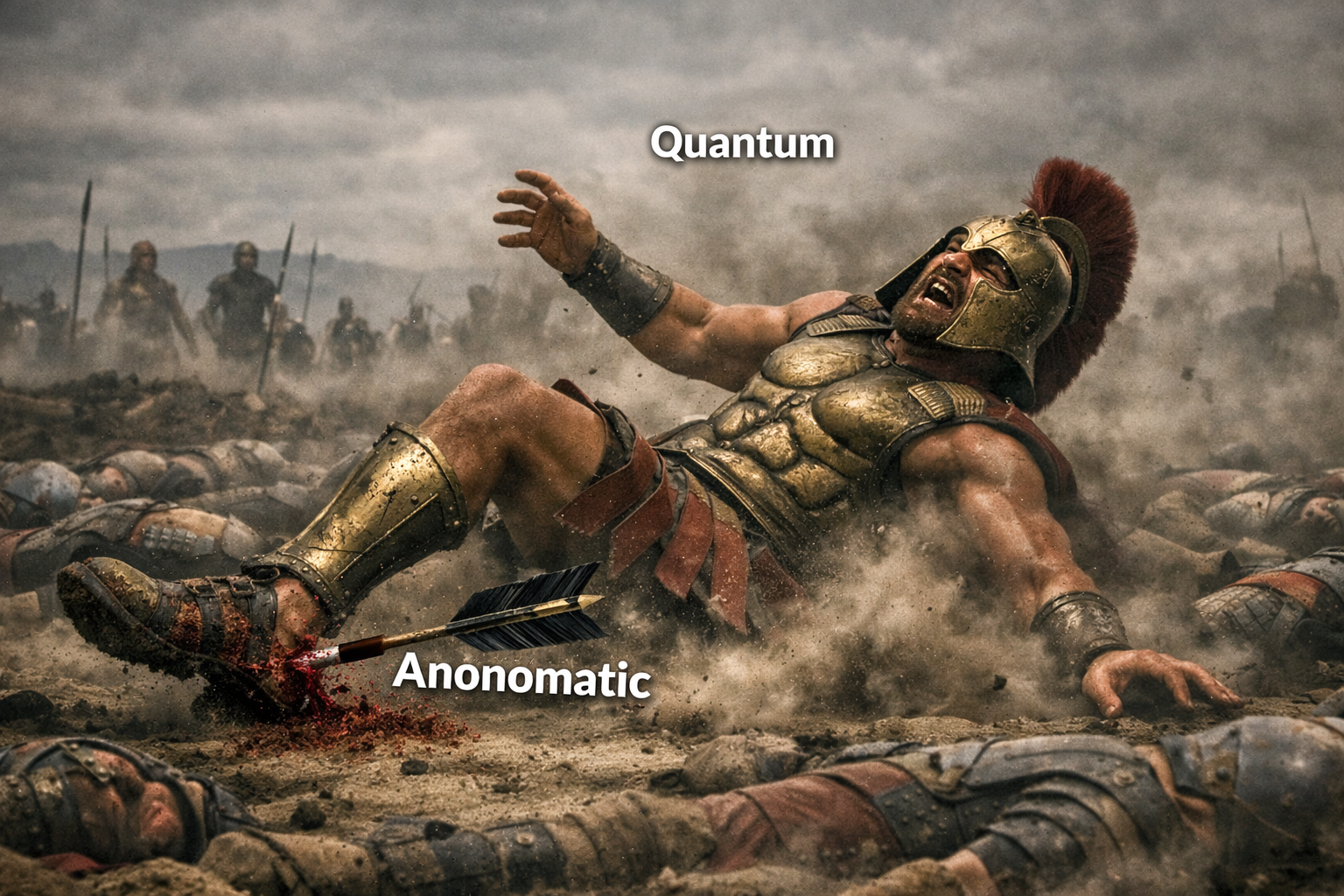
There is widespread concern that quantum computers could eventually defeat today’s encryption. Many experts warn that once quantum machines have enough qubits, they could break 256-bit encryption in seconds, putting massive amounts of data at risk.
That is why so much time, money, and energy are being invested in post-quantum encryption (PQE). Yet PQE promises only resistance, not protection. Why?
It is because while quantum computers are fundamentally different from today’s computers, PQE is not a fundamental change at all. It is essentially just more advanced mathematics. In short, it is only ‘resistance’ because industry’s answer to machines that can quickly solve extremely hard math is to make the math even harder.
But what if we changed the nature of data protection so quantum computers no longer posed a threat?
Today’s encryption ciphers have an inherent weakness: every decryption attempt produces a binary result. It either succeeds or fails. When a quantum computer attacks a key, the real weakness is not the one successful attempt; it is the trillions of failures which, when failing, reveal what does not work. We call this binary model Single-dimensional Result Factoring (SRF).
But in the arena of protecting sensitive personal data against loss and exposure, there is a different solution, available today on standard hardware, which can provide real protection against quantum-powered threats, not just resistance. That solution is based on changing the rules of the game in such a way that the nature and capabilities of quantum computers become a liability, not an asset, to attackers. We call that Multi-dimensional Result Factoring (MRF).
With MRF, every attempt to restore data returns a successful response. However, only the correct key returns the correct value. Every other key returns a syntactically valid but incorrect value.
Because this approach differs so sharply from conventional data protection, it can be easier to understand through an analogy.
Imagine an ATM that accepts any PIN and always dispenses a $20 bill. There are trillions of possible PINs, but only one produces a genuine bill. Every other PIN produces a counterfeit bill, each with a different flaw.
Because spending a counterfeit bill could lead to serious consequences, you need to closely examine each bill carefully to determine if it is real. That requires far more time and effort than an ATM which simply flashes a red signal for an incorrect PIN. The red signal enables quantum-powered attacks; the need to inspect each result thwarts them.
While this does make an attacker’s job much harder, at Anonomatic, we don’t think it is hard enough… yet. That is why when you use Anonomatic to protect your data, each type of value (ex: first names, last names, IDs, etc.) has a different key. So, not only does an attacker need to investigate the validity of each resulting value, but they must also put in the resources to validate the how each value on a data record relates to every other value. With Anonomatic, the more data you have, and the more types of values you protect, the safer your data is. The result is that quantum computers are no unbeatable foe to Anonomatic. And it all operates with speeds and scale comparable with clear text data.
In simplified terms, this is how MRF changes the nature of data protection and removes the advantage quantum computers give attackers. Building an MRF process from scratch is extremely complex. Anonomatic’s patented technology makes MRF simple to implement. Contact sales@anonomatic.com for more information or to request the white paper on Multi-dimensional Result Factoring.
Recent Comments